
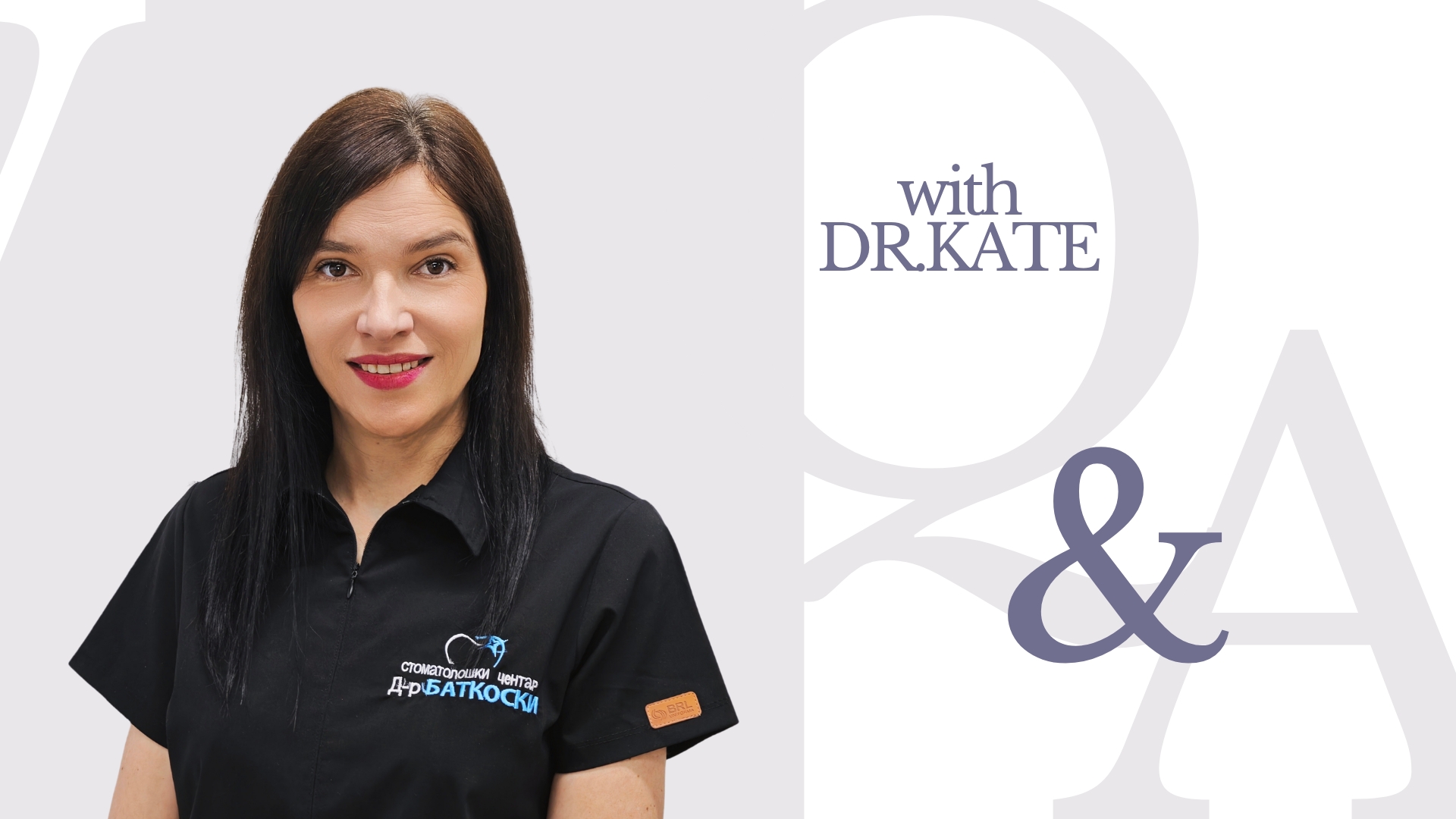
1. To start with, when is the right time for the first orthodontic examination — for children and adults?
Dr. Kate: The first orthodontic examination for children is recommended around the age of 7, as this allows us to identify irregular jaw development, bite problems, or lack of space at an early stage. However, it is never “too late” for orthodontic treatment. Adults can also successfully correct their bite and the position of their teeth.
2. Is orthodontics only about aesthetics, or can it also affect the health of the teeth?
Dr. Kate: Orthodontics is not only about creating a more beautiful smile. The proper position of the teeth and jaws allows for better function, easier maintenance of oral hygiene, and proper distribution of forces on the teeth. That is why we see orthodontic treatment as a combination of aesthetics, function, and long-term oral health.
3. What are the most common orthodontic problems that patients come to you with?
Dr. Kate: We most commonly see crowded teeth, bite problems, gaps between the teeth, and issues related to jaw development. Especially in children, it is important to identify these problems early because during the growth period, we can influence not only the position of the teeth but also the development of the jaws.
4. How do you decide whether a patient should wear fixed braces or clear aligners?
Dr. Kate: There is no single solution that is ideal for every patient. The decision depends on the specific orthodontic problem, the patient’s age, bite, tooth position, and expectations. After a detailed diagnosis and analysis, we choose the system that will allow us to achieve the most predictable and stable result.
5. How long does orthodontic treatment usually take, and what does the duration depend on?
Dr. Kate: The duration is individual. It depends on the complexity of the case, the patient’s age, biological response, and cooperation throughout the treatment. Therefore, I would not give the same timeframe to every patient — the most important thing is for the treatment to be properly planned, not simply fast.
6. One of the most common questions is: “Will my teeth move back after the treatment is completed?” What should patients know about retention?
Dr. Kate: After active orthodontic treatment, teeth have a natural tendency to shift. That is why retention is an essential part of the treatment, not simply the final step. The appropriate retention appliance and its proper use are crucial for maintaining the result in the long term.
7. And finally — what would you say to people who have been considering orthodontic treatment for a long time but keep postponing it?
Dr. Kate: Very often, the most difficult step is simply scheduling the first consultation. Once you have an accurate diagnosis and a treatment plan, you know what to expect and what your options are. Orthodontics should not be seen only as a change in appearance, but as an investment in proper function, oral health, and self-confidence.